 Yarden Brikman
 13/03/2026

Δεν είναι ακριβώς κόλπο.
Δεν είναι απλώς ένα κόλπο.
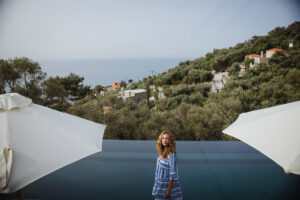
Η Λέσβος —που συχνά αναζητείται ως «Lesbos»— προσφέρει μια πιο διακριτική έκφραση πολυτέλειας σε σύγκριση με πολλά από τα πιο «υπερεκτεθειμένα» νησιά της Μεσογείου. Η ομορφιά εδώ τείνει να φαίνεται λιγότερο «στημένη», πιο στοιχειώδης: πετρώδεις πλαγιές, χωριά που έχουν υποστεί τη φθορά του χρόνου, το φως της θάλασσας που μαλακώνει και γίνεται πιο έντονο μέσα στο ίδιο απόγευμα. Στο Five Olive Dream Trip, που αποτελεί μέρος του ευρύτερου οράματος του « NRN Homeland », η πισίνα υπερυψωμένη δεν είναι απλώς τοποθετημένη δίπλα σε μια θέα. Έχει σχεδιαστεί έτσι ώστε να αποτελεί μέρος αυτής της θέας. Η αρχιτεκτονική, η μηχανική και το τοπίο συναντώνται στη γραμμή της θάλασσας.
Αυτό εξηγεί εν μέρει γιατί οι πισίνες «infinity» μπορούν να φαίνονται τόσο μαγευτικές. Οι επισκέπτες μπορεί να πιστεύουν ότι ανταποκρίνονται απλώς στη γοητεία τους. Οι σχεδιαστές, όμως, συνήθως επισημαίνουν κάτι πιο απαιτητικό: ευθυγράμμιση, αναλογία, προσανατολισμό, συγκράτηση. Μερικές φορές, πρόκειται για χιλιοστά. Ο ορίζοντας φαίνεται τόσο φυσικός μόνο και μόνο επειδή κάποιος εργάστηκε πολύ σκληρά για να τον δημιουργήσει έτσι.
Μια πισίνα «infinity» είναι επίσης γνωστή ως πισίνα «vanishing-edge» ή «negative-edge». Οι όροι ακούγονται εντυπωσιακοί, αλλά η αρχή είναι απλή: η μία άκρη είναι διαμορφωμένη έτσι ώστε το νερό να ρέει πάνω της σχηματίζοντας ένα λεπτό, συνεχές στρώμα. Από τη σωστή οπτική γωνία, το όριο της πισίνας φαίνεται να εξαφανίζεται, και το μάτι αντιλαμβάνεται μια αίσθηση συνέχειας αντί για περίφραξη.
Αυτό που κάνει το αποτέλεσμα πειστικό δεν είναι τόσο η υπερβολή όσο ο έλεγχος της οπτικής γραμμής. Η άκρη πρέπει να ευθυγραμμίζεται οπτικά με κάτι που μπορεί να προωθήσει την ψευδαίσθηση — έναν ορίζοντα της θάλασσας, μια κοιλάδα που κατεβαίνει, μια ευρεία και αδιάκοπη έκταση τοπίου. Αν ένας φράχτης, η γραμμή της στέγης ή μια ογκώδης κατασκευή διακόπτει αυτή τη θέα, η γοητεία εξασθενεί αμέσως. Ο καλός σχεδιασμός μιας πισίνας «άπειρου ορίζοντα» έχει, επομένως, να κάνει τόσο με το τι αφαιρείται από το οπτικό πεδίο όσο και με το τι κατασκευάζεται.
Στο Five Olive Dream Trip, η προνομιακή θέση στην πλαγιά του λόφου πάνω από το Πλομάρι αποτελεί κεντρικό στοιχείο της εμπειρίας. Η θέα της πισίνας προς τη θάλασσα επιτρέπει στην επιφάνεια του νερού να συναντά το Αιγαίο με ελάχιστη οπτική διακοπή. Τα πρωινά, όταν η θάλασσα και ο ουρανός αποκτούν παρόμοιες απαλές μπλε αποχρώσεις, η πισίνα μοιάζει λιγότερο με ένα κλειστό στοιχείο και περισσότερο με μια επέκταση του ελληνικού ορίζοντα.
Η Λέσβος κάνει αυτή την ψευδαίσθηση ιδιαίτερα συναρπαστική, καθώς η παράκτια τοπογραφία της συμβάλλει ήδη σε μεγάλο βαθμό σε αυτό. Το έδαφος κατεβαίνει σε αναβαθμίδες. Οι ελαιώνες απαλύνουν την πέτρα. Η θέα ανοίγεται σταδιακά και όχι μονομιάς. Σε περιβάλλοντα όπως αυτό, μια πισίνα υπερχείλισης δεν δημιουργεί το δράμα· απλώς επεξεργάζεται και πλαισιώνει ένα δράμα που υπάρχει ήδη στο τοπίο.
Η «εξαφανιζόμενη» άκρη μπορεί να κάνει τους αρχάριους κολυμβητές να διστάσουν. Οπτικά, δίνει την εντύπωση ότι υπάρχει πτώση. Στην πράξη, οι καλά σχεδιασμένες πισίνες «infinity» κατασκευάζονται με γνώμονα την ασφάλεια, και το εντυπωσιακό αποτέλεσμα οφείλεται στην προοπτική και όχι σε κίνδυνο.
Η άκρη υπερχείλισης δεν αποτελεί ένα κενό που μοιάζει με γκρεμό για τους κολυμβητές. Πίσω από αυτήν βρίσκεται μια κρυφή υποδομή συλλογής, σχεδιασμένη να δέχεται το νερό που ξεχειλίζει. Στις σωστά κατασκευασμένες πισίνες ξενοδοχείων, τα βάθη διαβαθμίζονται με σαφήνεια, οι επιφάνειες επιλέγονται τόσο για την πρόσφυση όσο και για την αισθητική τους, ενώ οι άκρες είναι σχεδιασμένες με τέτοιο τρόπο ώστε η εμπειρία να είναι ήρεμη και όχι επικίνδυνη. Η συντήρηση παίζει επίσης σημαντικό ρόλο εδώ· η ψευδαίσθηση λειτουργεί καλύτερα όταν τα πρακτικά συστήματα λειτουργούν αθόρυβα και με συνέπεια.
Σε ένα boutique ξενοδοχείο όπως Five Olive Dream Trip, αυτή η ισορροπία αποτελεί μέρος της γοητείας του. Η ατμόσφαιρα μπορεί να είναι εντυπωσιακή, ενώ η ίδια η εμπειρία παραμένει ήρεμη. Ο σχεδιασμός δημιουργεί μια αίσθηση ανοιχτού χώρου, χωρίς όμως να δίνει την εντύπωση αστάθειας. Οι επισκέπτες καλούνται να χαλαρώσουν απολαμβάνοντας τη θέα, όχι να παλέψουν μαζί της.
Πού πηγαίνει το νερό όταν ξεχειλίζει από την άκρη; Δεν εξαφανίζεται — απλώς χάνεται από τα μάτια μας. Ρέει σε μια κρυφή λεκάνη συλλογής, που ουσιαστικά αποτελεί μια δευτερεύουσα κοιλότητα ή δεξαμενή τοποθετημένη κάτω ή πέρα από το ορατό χείλος της πισίνας. Από εκεί, το νερό εισέρχεται στο σύστημα φιλτραρίσματος, υποβάλλεται σε επεξεργασία και αντλείται ξανά στην κύρια πισίνα.
Αυτός ο συνεχής κύκλος αποτελεί ένα από τα λιγότερο ορατά και πιο σημαντικά στοιχεία της εμπειρίας μιας πισίνας «infinity». Το νερό ρέει πέρα από την άκρη, συλλέγεται, φιλτράρεται και επιστρέφει. Ξανά και ξανά. Η επιφάνεια μπορεί να φαίνεται γαλήνια, αλλά πίσω από αυτή τη γαλήνη κρύβεται κίνηση: αντλίες, συστήματα εξισορρόπησης, ρυθμιστές στάθμης νερού και προσεκτική παρακολούθηση, ώστε η άκρη να διατηρεί την ομαλή της όψη.
Υπάρχει εδώ ένα χρήσιμο παράδοξο. Οι λίμνες που φαίνονται πιο ήρεμες συχνά βασίζονται στην πιο επίμονη δραστηριότητα πίσω από τα παρασκήνια. Ορατή ηρεμία, αόρατη εργασία. Σε Five Olive Dream Trip, ο επισκέπτης αντικρίζει το αποτέλεσμα και όχι τους μηχανισμούς: μια πισίνα που δίνει την αίσθηση της αβίαστης λειτουργίας, επειδή η πολυπλοκότητα παραμένει διακριτικά στο παρασκήνιο.
Οι πισίνες τύπου «infinity» δεν αφήνουν περιθώρια για αβεβαιότητα. Αν η κατασκευή δεν είναι απόλυτα επίπεδη, η υπερχείλιση μπορεί να γίνει άνιση και η γραμμή ορίζοντα να μην δίνει πλέον την εντύπωση της απρόσκοπτης συνέχειας. Αντί για μια ομαλή οπτική συγχώνευση, η γραμμή του νερού μπορεί να φαίνεται ελαφρώς ασύμμετρη.
Γι’ αυτό ακριβώς η ισοπέδωση και η βαθμονόμηση της πισίνας αποτελούν τόσο ουσιαστικά στοιχεία της διαδικασίας. Σε ορισμένα έργα, οι λεπτές ρυθμίσεις μπορεί να απαιτήσουν αρκετό χρόνο, ειδικά σε τοποθεσίες με κλίση ή σε ανοιχτούς χώρους. Μερικά χιλιοστά μπορούν να επηρεάσουν τον τρόπο με τον οποίο χύνεται το νερό, τον τρόπο με τον οποίο η άκρη αντανακλά το φως, καθώς και το πόσο πειστική φαίνεται η ψευδαίσθηση από την οπτική γωνία ενός επισκέπτη.
Αυτός είναι ένας από τους λόγους για τους οποίους η ακρίβεια συχνά εκλαμβάνεται ως πολυτέλεια, ακόμα και όταν οι επισκέπτες δεν την αναφέρουν ποτέ ρητά. Οι άνθρωποι αντιλαμβάνονται πότε ένας χώρος δίνει την αίσθηση της αρμονίας — όταν η βεράντα εντάσσεται αρμονικά στο τοπίο, όταν η γραμμή του νερού φαίνεται καθαρή, όταν η συνολική σύνθεση ηρεμεί το σώμα αντί να το αποσπά. Στο Five Olive Dream Trip, αυτή η σκόπιμη προσοχή στις λεπτομέρειες είναι μέρος αυτού που κάνει την πισίνα να φαίνεται ενσωματωμένη και όχι απλώς διακοσμητική.
Οι σχεδιαστές κατανοούν κάτι που αποδεικνύεται συχνά στον τομέα της φιλοξενίας: η εμπιστοσύνη χτίζεται μέσα από τις λεπτομέρειες. Ένας απαιτητικός ταξιδιώτης μπορεί να μην φτάσει στο κατάλυμα σκεπτόμενος την ισοπέδωση της πισίνας, αλλά θα το παρατηρήσει όταν η συνολική εμπειρία του δίνει την αίσθηση της συνοχής. Ο καλός σχεδιασμός κερδίζει την εμπιστοσύνη διακριτικά.
Η κατασκευή οποιασδήποτε πισίνας σε επίπεδο έδαφος αποτελεί μια πρόκληση. Η κατασκευή μιας πισίνας υπερχείλισης σε μια παράκτια πλαγιά, σε βραχώδη τοποθεσία ή σε υπερυψωμένο επίπεδο αποτελεί μια άλλη πρόκληση. Οι πλαγιές απαιτούν προσεκτική δομική στήριξη, λύσεις συγκράτησης, σχεδιασμό αποστράγγισης και λήψη υπόψη των ανέμων. Ο προσανατολισμός έχει επίσης σημασία: η ίδια πισίνα μπορεί να φαίνεται συνηθισμένη ή εξαιρετική, ανάλογα με τον τρόπο που αλληλεπιδρά με τον ήλιο, τη θάλασσα και το ανάγλυφο του εδάφους.
Τα ελληνικά παράκτια τοπία ανταμείβουν αυτή την προσπάθεια. Οι θέες είναι πολυεπίπεδες και όχι μονοδιάστατες — η θάλασσα μπροστά, λόφοι και δασύλλια γύρω, το φως που αλλάζει πάνω από το κεφάλι. Το Πλομάρι αποτελεί ένα ιδιαίτερα υποβλητικό σκηνικό, καθώς ισορροπεί την αίσθηση της ανοιχτότητας με αυτή της οικειότητας. Νιώθεις την ατμόσφαιρα του χωριού πίσω σου και την απεραντοσύνη του Αιγαίου μπροστά σου. Μια πισίνα υπερχείλισης που εντάσσεται σε αυτό το σκηνικό μπορεί να μοιάζει λιγότερο με θεαματικό στοιχείο και περισσότερο με συνέχεια του τοπίου.
Αυτό αποτελεί επίσης μέρος της γοητείας της Λέσβου. Σε σύγκριση με προορισμούς με πυκνότερη δόμηση, το νησί προσφέρει συχνά μια μεγαλύτερη αίσθηση οπτικής ευρυχωρίας. Λιγότερο συνωστισμό. Λιγότερο θόρυβο που να ανταγωνίζεται τον ορίζοντα. Στο Five Olive Dream Trip, ο περιβάλλον ελαιώνας και η πλαγιά με θέα στη θάλασσα συμβάλλουν στη διατήρηση αυτής της αίσθησης ευρυχωρίας — της ποιότητας που αναζητούν πραγματικά πολλοί ταξιδιώτες όταν ψάχνουν για τις καλύτερες θέες από πισίνες υπερχείλισης στη Λέσβο.
Οι πρωινές βουτιές έχουν καλή φήμη μεταξύ των σχεδιαστών και αυτό δεν είναι τυχαίο. Το πρωινό φως είναι συνήθως απαλό, ο αέρας πιο δροσερός, το νερό φαίνεται πιο ήρεμο. Στις Five Olive Dream Trip, οι πρώτες πρωινές ώρες μπορούν να προσφέρουν μια ιδιαίτερα διαλογιστική ατμόσφαιρα: το απαλό χρυσό φως που απλώνεται πάνω από την πλαγιά του Πλομαρίου, τα φύλλα της ελιάς που κυματίζουν στο ελαφρύ αεράκι, το Αιγαίο που ακόμα κρύβει τη σιωπή της αυγής. Αν οι πισίνες υπερχείλισης έχουν να κάνουν με την αρμονία, η ανατολή του ηλίου είναι ίσως η στιγμή που αυτή η αρμονία γίνεται πιο αισθητή.
Οι αντανακλάσεις του ηλιοβασιλέματος αποτελούν την πιο «κινηματογραφική» επιλογή. Καθώς ο ήλιος χαμηλώνει, η πισίνα μετατρέπεται συχνά σε έναν δεύτερο ουρανό, συγκεντρώνοντας αποχρώσεις κεχριμπαριού, τριαντάφυλλου και απαλού χαλκού, πριν επιστρέψει αυτές τις αποχρώσεις στη θάλασσα. Στο Five Olive Dream Trip, ο προσανατολισμός με θέα στη θάλασσα δίνει χώρο σε αυτές τις αντανακλάσεις να εκτείνονται. Οι επισκέπτες συχνά σταματούν το κολύμπι και απλώς στέκονται μέσα στο νερό, παρατηρώντας τον ορίζοντα να μεταμορφώνεται σε ρευστό τοπίο.
Ο νυχτερινός φωτισμός αλλάζει εντελώς την ατμόσφαιρα. Ο σωστός νυχτερινός φωτισμός της πισίνας πρέπει να λάμπει και όχι να τυφλώνει. Πρέπει να βοηθά στον προσδιορισμό των ορίων της πισίνας, χωρίς να κατακλύζει το σκοτάδι πέρα από αυτά. Το Five Olive Dream Trip, το βράδυ μπορεί να προσφέρει ένα διαφορετικό είδος πολυτέλειας: ήσυχες σουίτες, ένα ιδιωτικό τζακούζι εδώ και εκεί, μια σιωπή πάνω από το δασάκι, σημεία φωτός που αντανακλώνται στην πισίνα, ενώ η θάλασσα υποχωρεί σε βελούδινη σιωπή. Το νυχτερινό κολύμπι δεν έχει τόσο να κάνει με τη θέα σε μεγάλη απόσταση, όσο με την ατμόσφαιρα, την ιδιωτικότητα και τον αργό ρυθμό του νησιού μετά το σούρουπο.
Όσον αφορά τις φωτογραφίες, μερικές απλές επιλογές κάνουν τη διαφορά. Τραβήξτε από χαμηλό ύψος, κοντά στη γραμμή του νερού, ώστε η γραμμή που χάνεται να ευθυγραμμίζεται πιο καθαρά με τον ορίζοντα. Η «χρυσή ώρα» και η «μπλε ώρα» είναι συχνά οι πιο κολακευτικές στιγμές, καθώς η αντίθεση είναι πιο απαλή και η συγχώνευση μεταξύ πισίνας, θάλασσας και ουρανού φαίνεται πιο φυσική. Ο έντονος μεσημεριανός ήλιος μπορεί ακόμα να δώσει καθαρές εικόνες, αλλά ενδέχεται να «εξομαλύνει» την ατμόσφαιρα. Χρησιμοποιήστε την πέτρινη βεράντα, έναν λόφο ή μια γωνία της πλαγιάς για να υποδηλώσετε την κλίμακα. Σε Five Olive Dream Trip, οι πιο δυνατές εικόνες προέρχονται συχνά από τη συγκράτηση — την αίσθηση ότι η θέα παρατηρείται, δεν επιβάλλεται.
Μια αξέχαστη πισίνα υπερχείλισης δεν είναι ποτέ μόνο μια εικόνα. Είναι και ήχος: το αεράκι που σφυρίζει ανάμεσα στα κλαδιά των ελιών, η απαλή σιωπή του νερού που κυλά, οι μακρινοί ήχοι της ζωής από το χωριό κάτω. Είναι άρωμα: ο αέρας της θάλασσας, η ζεστή πέτρα, η πράσινη πικράδα των ελαιώνων που ζεσταίνονται απαλά από τον ήλιο. Είναι ρυθμός: η μικρή αλλά αδιαμφισβήτητη αίσθηση ότι ο χρόνος έχει χαλαρώσει.
Σε αυτό το σημείο, οι μικρές, εξατομικευμένες ξενοδοχειακές επιχειρήσεις έχουν συχνά πλεονέκτημα έναντι των μεγαλύτερων ξενοδοχειακών συγκροτημάτων. Η ιδιωτικότητα αλλάζει την αντίληψη. Το ίδιο και η κλίμακα. Οι καλύτερες θέες δίνουν την αίσθηση ότι είναι «πλαισιωμένες» και όχι «συμφωρημένες», ότι προσφέρουν συναισθηματική ευρυχωρία και όχι απλώς μια θεαματική εικόνα. Οι ταξιδιώτες που συγκρίνουν ξενοδοχεία στη Λέσβο με θέα σε πισίνα υπερχείλισης συχνά θέτουν ένα βαθύτερο ερώτημα πίσω από το προφανές: θα είναι η πραγματικότητα τόσο γαλήνια όσο υποδηλώνει η φωτογραφία;
Στο Five Olive Dream Trip, η απάντηση εκφράζεται μέσω της σύνθεσης και όχι μέσω επιθετικών πωλήσεων: σουίτες με θέα στη θάλασσα, ξαπλώστρες τοποθετημένες έτσι ώστε να προσφέρουν χαλάρωση, η επιλογή ιδιωτικού τζακούζι και ένα περιβάλλον όπου η αρχιτεκτονική και η φύση βρίσκονται σε διάλογο. Για τους ταξιδιώτες που φοβούνται την υπερβολή ή την αναντιστοιχία, αυτή η συνοχή έχει σημασία. Η εικόνα γίνεται πιο έντονη όταν υποστηρίζεται από διακριτική εξυπηρέτηση, προσεγμένο σχεδιασμό και μια αίσθηση του τόπου που έχει τις ρίζες της στην ίδια τη Λέσβο.